
- Home
- Blog
- Influencer news
- Why Visual Goal-Setting Works: The Psychology Behind Vision Boards
Why Visual Goal-Setting Works: The Psychology Behind Vision Boards
The Brain Science That Explains Why Vision Boards Drive Real Progress




Why Visual Goal-Setting Works: The Psychology Behind Vision Boards
Photo Credit: Instagram
- The Psychology of Vision Boards
- Why Seeing Your Goals Changes Everything
- Why Your Brain Loves Vision Boards
As a founder in the well-being space, one question I'm often asked is: Do vision boards really work, or are they just aesthetic collages? The answer lies not in trends, but in psychology.
The Brain Responds More Strongly to Images Than Words:
Our brains are wired to respond to visuals far more strongly than words alone. Nearly half of the brain is involved in visual processing, which is why images are processed faster and remembered longer than text. When we see our goals rather than just think about them, we activate neural pathways associated with motivation, memory, and emotional engagement. Visual goal-setting transforms abstract desires into something tangible and emotionally real.
Visualization, Familiarity, and the 17-Second Technique:
When we repeatedly visualize a desired outcome, the brain begins to treat it as familiar and attainable. A concept that I usually talk about in our Vision Board Making workshops is the 17-second visualization technique, which suggests that holding a clear, focused thought or image for just 17 seconds can begin to activate momentum at a cognitive level. While not about instant results, this practice strengthens focus and emotional alignment, making vision boards a practical tool for reinforcing intention through short, consistent visual engagement.
The Power of Repeated Exposure and Subconscious Conditioning:
Another key factor is repeated exposure. When your goals are placed somewhere you see daily - on your wall, desk, or workspace, they gently influence your subconscious. These visual cues shape micro-decisions: what you prioritize, what you say no to, and how you respond to challenges. Over time, this subtle conditioning builds long-term commitment without relying on constant willpower.

Photo Credit: Instagram
Cognitive Focus in an Age of Constant Distraction:
What really ties it all together is cognitive focus. In a world of constant distraction, vision boards act as anchors. They reduce mental clutter by narrowing attention to the goals that truly matter. When goals are visually defined, clarity increases, and clarity leads to consistency.
Designing Vision Boards That Feel Intentional, Not Overwhelming:
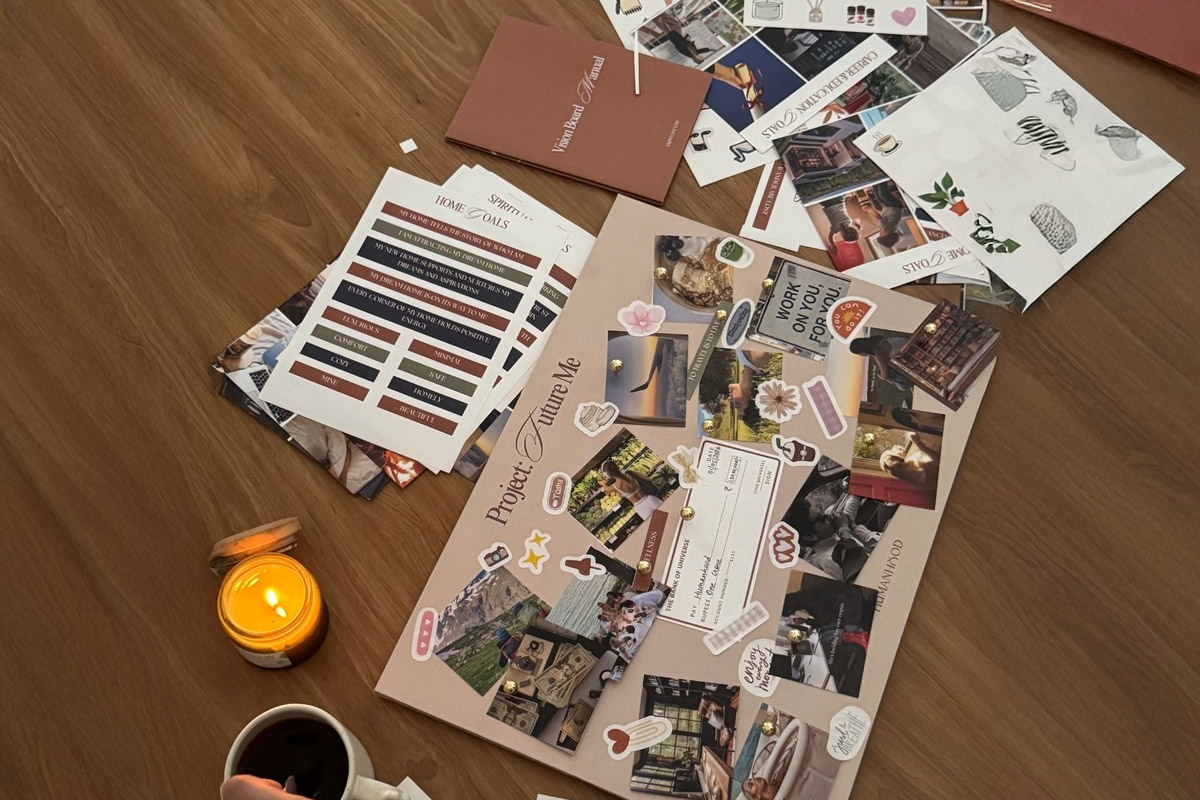
At Humanhood, this understanding shaped how we designed our Vision Board Kit. We observed that many people loved the idea of vision boards but felt overwhelmed by the process. Our kit is guided, minimal, and intentionally designed to make goal-setting feel calm, not chaotic. It's not about manifesting overnight success, but about building a daily visual relationship with your goals.
Why Vision Boards Work Without Relying on “Magic”
Vision boards don't work because they're magical. They work because they align with how the human mind functions. When intention meets visibility, progress becomes natural, and that's where real transformation begins.
About the Author:
Unnati Mehta is the Co‑Founder of Humanhood, a wellness brand creating simple, accessible tools that support personal growth and well‑being.
For the latest Influencer News and Interviews, follow WhosThat360 on X, Facebook, Instagram and Threads. For the latest interview videos, subscribe to our YouTube channel.
Further reading: Blog, Latest blog, Unnati Mehta blog, social media, news and media, Whosthat360, trending story, viral news
Comments
 Post Comment
